Some are unquestionably genuine and simply unread. Some have a documented, unglamorous explanation buried under a much better story. Pick one to see what's actually known.
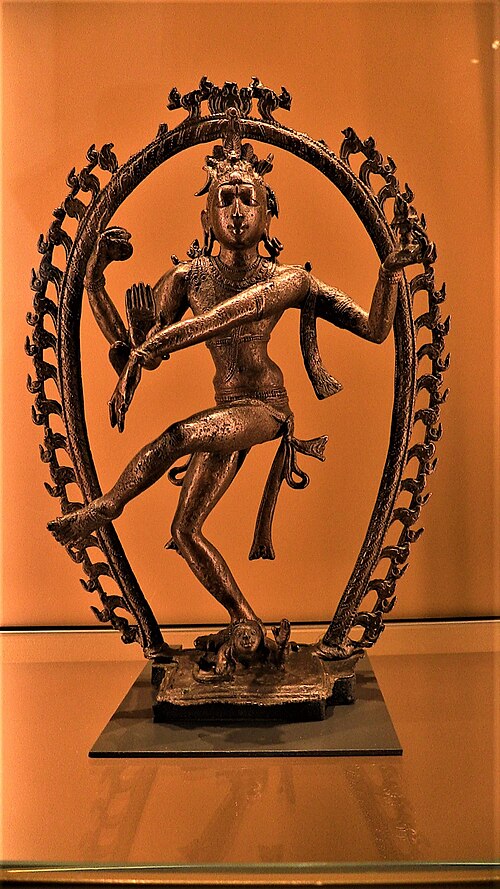
According to a widely circulated story, a small brass idol — about 5.3 cm tall and weighing roughly 47 grams, depicting a kneeling, serpent-hooded figure resembling Shiva — was handed to CIA officials around 1959–60 near the Nepal–Tibet border by a Tibetan monk, sealed inside a heavy wooden chest. The story holds that radiocarbon dating of the chest's timber, performed by the University of California Radiation Laboratory, returned a date of roughly 26,450 BCE, making the idol tens of thousands of years older than any verified Hindu artifact.
No peer-reviewed publication, museum record, or independent laboratory report has ever surfaced to confirm this dating. The claim circulates almost entirely through fringe-archaeology blogs, spiritual-interest sites, and video channels rather than academic literature, and the idol itself is reported to have gone missing after the CIA was unable to trace it. It's a story worth knowing precisely because it's widely shared — but it remains an unverified claim, not a documented finding.
Claimed date: c. 26,450 BCE (unverified)
Status: No peer-reviewed sourcing found; object reportedly lost
Caution: Circulates mainly through fringe and blog sources, not academic research
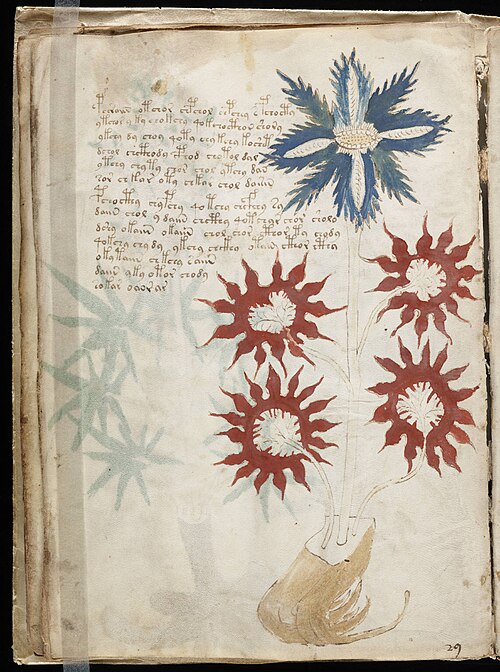
A roughly 240-page illustrated codex written entirely in an unknown script now called "Voynichese," named after the rare-book dealer Wilfrid Voynich, who acquired it in 1912. Its pages are filled with drawings of unidentifiable plants, astrological diagrams, and small nude figures bathing in networks of green liquid, alongside continuous, fluently-written text that has never been read by anyone since it was created. Radiocarbon dating places the vellum firmly in the early 1400s, ruling out a modern hoax on materials grounds alone.
Attempts to crack it span a century, including professional WWII and Cold War cryptanalysts, and claims of success — Slavic language, Hebrew, proto-Romance, AI translation — surface every few years, only to be dismantled by linguists soon after. Statistical analysis shows the text obeys language-like patterns (such as Zipf's law of word frequency), arguing against pure meaningless gibberish, but that alone hasn't been enough to unlock it.
Dated: Early 1400s, by radiocarbon analysis of the vellum
Housed: Beinecke Rare Book & Manuscript Library, Yale University
Mystery: Its script and language remain completely undeciphered
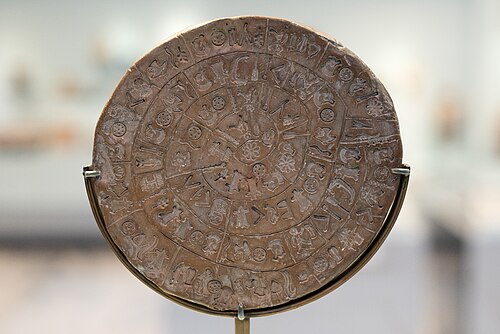
Discovered in 1908 in the ruins of the Minoan palace of Phaistos on Crete, this fired-clay disc, about 16 cm across, carries 241 symbol-tokens from a set of 45 unique signs, arranged in a spiral on both faces. Remarkably, the symbols weren't hand-carved individually — each was pressed into the wet clay using a carved stamp, making the disc a strong candidate for the earliest known use of a movable-type-like printing technique, over 3,000 years before Gutenberg.
No second object bearing the same script has ever been found anywhere, leaving scholars with no comparative material to test any proposed reading against. That uniqueness has produced dozens of competing decipherments over the decades — a prayer, a solar calendar, even a board game — none accepted by mainstream Minoan scholarship, and a persistent minority of researchers have gone as far as questioning the disc's authenticity altogether, though most archaeologists treat it as genuine.
Discovered: 1908, palace of Phaistos, Crete
Dated: c. 1700 BCE, Minoan Bronze Age
Mystery: Unique — no comparative text has ever been found
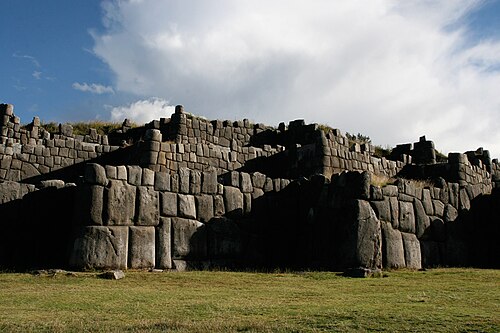
Above the city of Cusco, Peru, the Inca built Sacsayhuamán's outer walls from megalithic limestone blocks — some estimated to weigh over 100 tons — cut into irregular polygonal shapes and fitted together so precisely that a knife blade still can't slip between them, using no mortar, no iron tools, and, as far as evidence shows, no wheel.
How stones this large were shaped and moved has drawn both serious experimental archaeology and popular "ancient astronaut" speculation. Documented experiments moving and fitting large replica blocks with ramps, log rollers, ropes, and large coordinated labor forces have demonstrated plausible Inca-era construction methods; claims involving lost technology or extraterrestrial assistance are not supported by any physical or documentary evidence and aren't taken seriously by mainstream archaeology.
Built by: The Inca Empire, 15th century CE
Engineering: Some blocks exceed 100 tons, fitted without mortar
Claim vs. evidence: Inca stoneworking has been experimentally replicated; "ancient alien" theories remain unsupported
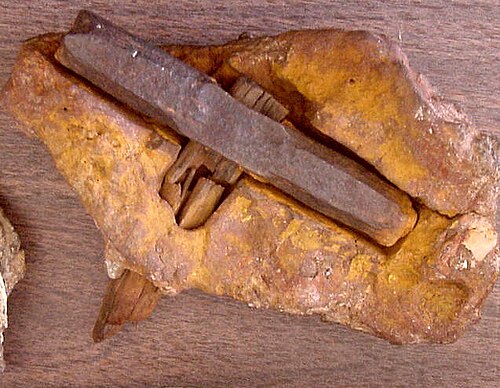
In 1936, a local couple walking along Red Creek near London, Texas, found an iron hammerhead embedded in a rock concretion. Since the 1980s it has been promoted by young-earth creationist writers as an "out-of-place artifact" (OOPArt) — supposed evidence of advanced human toolmaking existing millions of years ago, or of humans coexisting with far older rock layers.
Geologists who have examined the object describe a far less dramatic origin: the surrounding concretion is an ordinary mineral nodule, and such nodules can form relatively quickly around debris sitting in mineral-rich water, not necessarily over geological ages. The hammer itself — a wooden handle partly replaced by coal, a head shaped like ordinary period tools — is consistent with 19th-century mining equipment, not an unknown ancient technology. No peer-reviewed geological study has ever supported the "millions of years old" claim.
Found: 1936, near London, Texas
Popular claim: Evidence of advanced pre-historic or "pre-flood" technology
Mainstream explanation: A 19th-century tool inside a naturally, relatively fast-forming mineral concretion
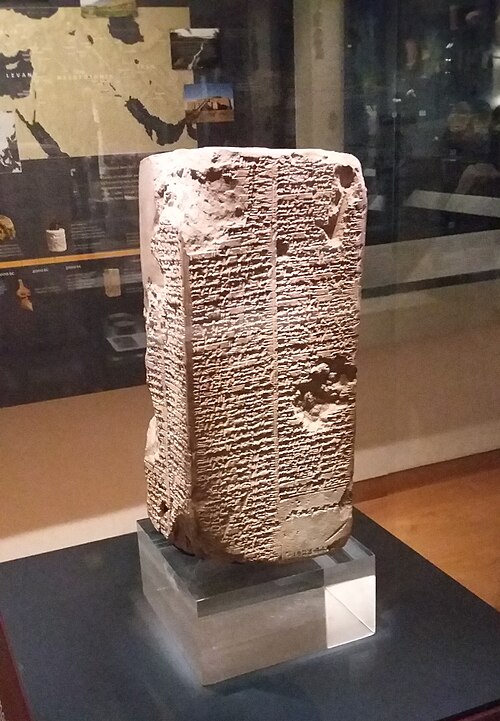
Known from several surviving clay copies, this ancient Mesopotamian document lists the kings of Sumer and the length of each reign, opening in a legendary period "before the flood" and continuing into historically verifiable dynasties. The most complete surviving copy, the Weld-Blundell Prism, is a four-sided clay prism inscribed around 1800 BCE, now held at Oxford's Ashmolean Museum.
Its earliest kings are given implausible reign lengths — the first, Alulim of Eridu, is credited with 28,800 years on the throne — before the text describes a great flood "sweeping over" the land, after which reign lengths drop sharply to human-scale numbers. Historians read the pre-flood section as royal legend or political ideology rather than literal chronology, while its later entries increasingly line up with independently dated dynasties. Its flood narrative closely parallels the one in the Epic of Gilgamesh, recorded centuries before the similar account later written in Genesis.
Best copy: The Weld-Blundell Prism, c. 1800 BCE, Ashmolean Museum
Structure: Legendary pre-flood kings, then historically verifiable dynasties
Notable: Its flood story predates and parallels the account in Genesis
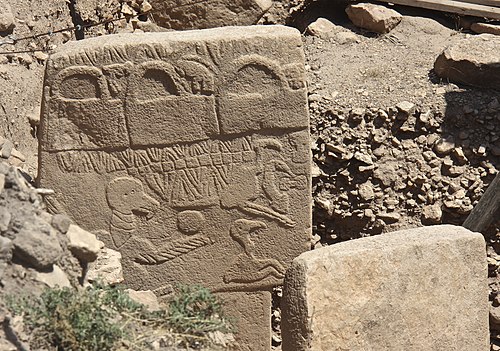
Dozens of massive T-shaped limestone pillars, arranged in circular enclosures, were carved by hunter-gatherers around 9600 BCE — some 6,000 years before Stonehenge, and before farming, pottery, or writing existed anywhere on Earth. The pillars are carved in relief with foxes, boars, scorpions, snakes, and vultures, and some bear stylized human arms and hands running down their sides, suggesting the pillars represent stylized beings rather than simple architectural posts.
The most discussed single carving is Pillar 43, the so-called "Vulture Stone," whose densely packed animal reliefs — including a vulture appearing to hold a sphere over what may be a headless human figure — have been read by some researchers as a symbolic narrative, and more speculatively, as an astronomical record of a comet impact around 10,950 BCE. Mainstream archaeology treats these readings as genuinely debated interpretations rather than settled fact; what's undisputed is the carvings' age and the skill of their unmetaled toolwork.
Carved: c. 9600 BCE, southeastern Turkey
Best-known pillar: Pillar 43, the "Vulture Stone"
Debated: Whether its imagery encodes an astronomical or narrative record
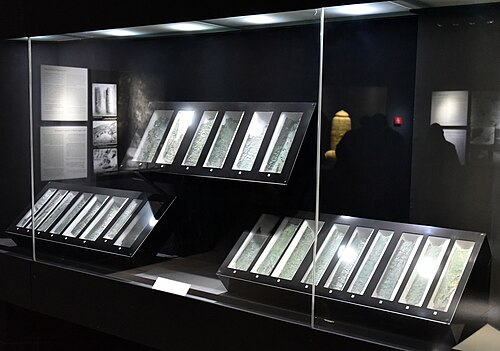
Found in eleven caves around Qumran, near the Dead Sea, between 1946 and 1956, the roughly 981 surviving manuscripts include the oldest known copies of the Hebrew Bible by nearly a thousand years, alongside community rules, hymns, and commentary likely belonging to the Essenes, a Jewish sect. Almost all of them were written on parchment or papyrus — except one.
The Copper Scroll, found in Cave 3, is inscribed on three riveted sheets of nearly pure copper rather than any writing material used elsewhere in the collection, listing 64 locations where enormous quantities of gold, silver, and other treasure were supposedly hidden. Unlike the religious and legal texts found beside it, none of the listed treasure has ever been conclusively located, and scholars remain divided on whether it records real historical wealth — perhaps from the Second Temple — a symbolic or legendary list, or something else entirely.
Discovered: 1946–1956, caves near Qumran
Unique among the scrolls: The Copper Scroll, inscribed on metal, not parchment
Unresolved: None of its listed treasure locations have ever been found
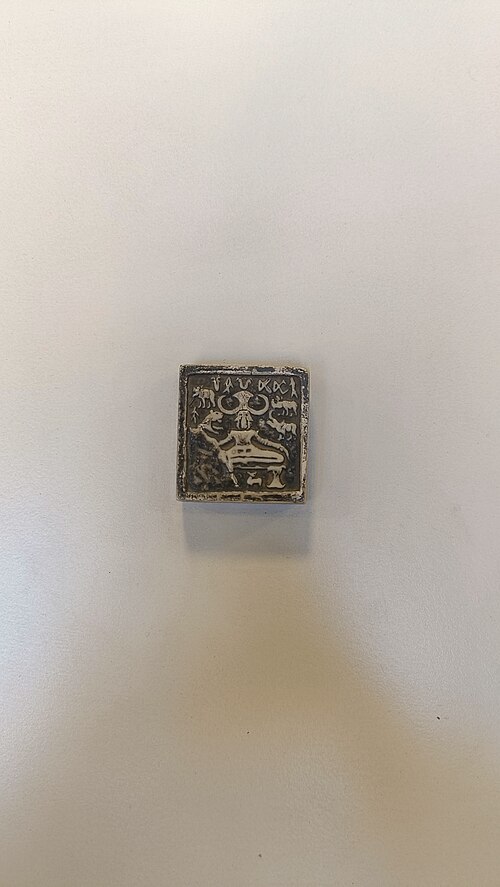
Thousands of small carved steatite seals have been recovered from Indus Valley sites like Mohenjo-daro and Harappa, most bearing a short inscription in the still-undeciphered Indus script above an animal motif, most commonly a "unicorn"-like bull. One seal in particular depicts something very different.
The so-called Pashupati Seal, found at Mohenjo-daro, shows a horned, seated figure surrounded by an elephant, a tiger, a rhinoceros, and a buffalo. Excavator John Marshall was the first to propose reading it as an early prototype of the Hindu god Shiva in his Pashupati ("Lord of Animals") aspect, and the name has stuck. The interpretation remains genuinely contested: critics point out that reading a much later Hindu deity backward onto a script-undeciphered civilization risks projecting meaning its original makers may never have intended.
Found: Mohenjo-daro, Indus Valley Civilization
Dated: c. 2350–2000 BCE
Debated: Whether it depicts a proto-Shiva figure, as first proposed by John Marshall
Some of these objects are genuinely undeciphered by the best scholarship available — the Voynich Manuscript and Phaistos Disc simply haven't given up their secrets yet. Others, like the London Hammer, have a documented, unglamorous explanation that gets less attention than the exciting story built on top of it. And at least one, the Kalpa Vigraha, is a claim worth knowing precisely because it's widely repeated, not because it's been verified. Telling these apart isn't about dismissing wonder — it's what makes the genuine mysteries, the ones no one has solved yet, worth taking seriously.
Voynich manuscript on Wikipedia · Göbekli Tepe on Wikipedia · Dead Sea Scrolls Digital Library