Darshniks

Rise and Fall

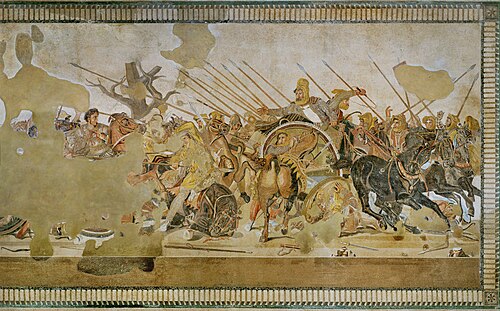
The Alexander Mosaic from Pompeii, showing Alexander at the Battle of Issus

Ancient empires, and what the philosophers learned from them

Every empire believed it would last for ever. None did. Twelve of the ancient world's great powers are set out on one timeline below; then come the thinkers, from Confucius to Ibn Khaldun, who watched empires rise and fall and tried to understand why.

Five thousand years at a glance

Bars are to scale. Tap any empire to jump to it.

Egypt Norte Chico Indus Valley Akkad Assyria Babylon The Hittites Shang and Zhou China Carthage Persia Athens Macedon

The twelve empires

Egypt

c. 3100–30 BCE

Unified under the first pharaohs around 3100 BCE, Egypt lasted three thousand years through its Old, Middle and New Kingdoms, building the pyramids of Giza around 2560 BCE. Its ideal of ma’at, cosmic order, truth and justice, was the standard every pharaoh claimed to uphold. It ended in 30 BCE with the death of Cleopatra VII and Roman annexation.

Norte Chico

c. 3000–1800 BCE

On the dry coast of Peru, the people of Norte Chico built large stone platform mounds at sites like Caral, as early as the pyramids of Egypt. One of the oldest civilisations of the Americas, it has left little sign of warfare, and no pottery has been found from its early centuries.

Indus Valley

mature phase c. 2600–1900 BCE

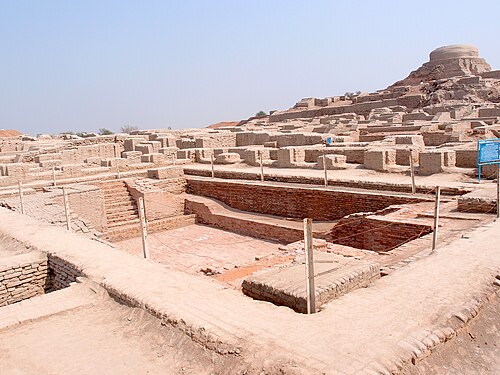
Cities such as Harappa and Mohenjo-daro had grid streets, standard bricks and covered drains centuries ahead of their time. Their script is still undeciphered, so we know the Indus people only through what they built. The cities declined after about 1900 BCE, perhaps as rivers shifted and the climate changed.

Mohenjo-daro — Saqib Qayyum, CC BY-SA 3.0

Akkad

c. 2334–2154 BCE

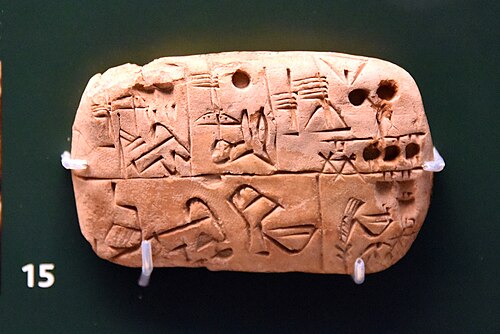
Sargon of Akkad united the city-states of Mesopotamia into what is often called the first empire. His daughter Enheduanna, high priestess at Ur, wrote hymns under her own name, making her the first author in history known by name. The empire broke apart within two centuries.

Osama Shukir Muhammed Amin FRCP(Glasg), CC BY-SA 4.0

Assyria

c. 2025–609 BCE; at its height 9th–7th c.

Assyria built the most formidable army of its age and ruled from Egypt to Iran. King Ashurbanipal gathered a vast library of clay tablets at Nineveh, which preserved the Epic of Gilgamesh. Nineveh fell to the Babylonians and Medes in 612 BCE.

Babylon

first dynasty c. 1894–1595 BCE

King Hammurabi (r. 1792–1750 BCE) carved nearly three hundred laws on a stone stele, with a prologue saying the gods had made him king so that the strong should not oppress the weak. Babylon was sacked by the Hittites in 1595 BCE but rose again, and later became the capital of Nebuchadnezzar.

The Hittites

c. 1650–1180 BCE

From their capital Hattusa in Anatolia, the Hittites rivalled Egypt. After fighting Ramesses II at Kadesh (c. 1274 BCE), the two powers signed one of the oldest surviving peace treaties. The empire vanished in the Bronze Age collapse around 1180 BCE.

Shang and Zhou China

Shang c. 1600–1046 BCE; Zhou 1046–256 BCE

The Shang left the earliest Chinese writing, on oracle bones used for divination. The Zhou who overthrew them justified the conquest with the Mandate of Heaven. As Zhou power crumbled, the Hundred Schools of Thought flourished, among them Confucius and Laozi.

Carthage

c. 814–146 BCE

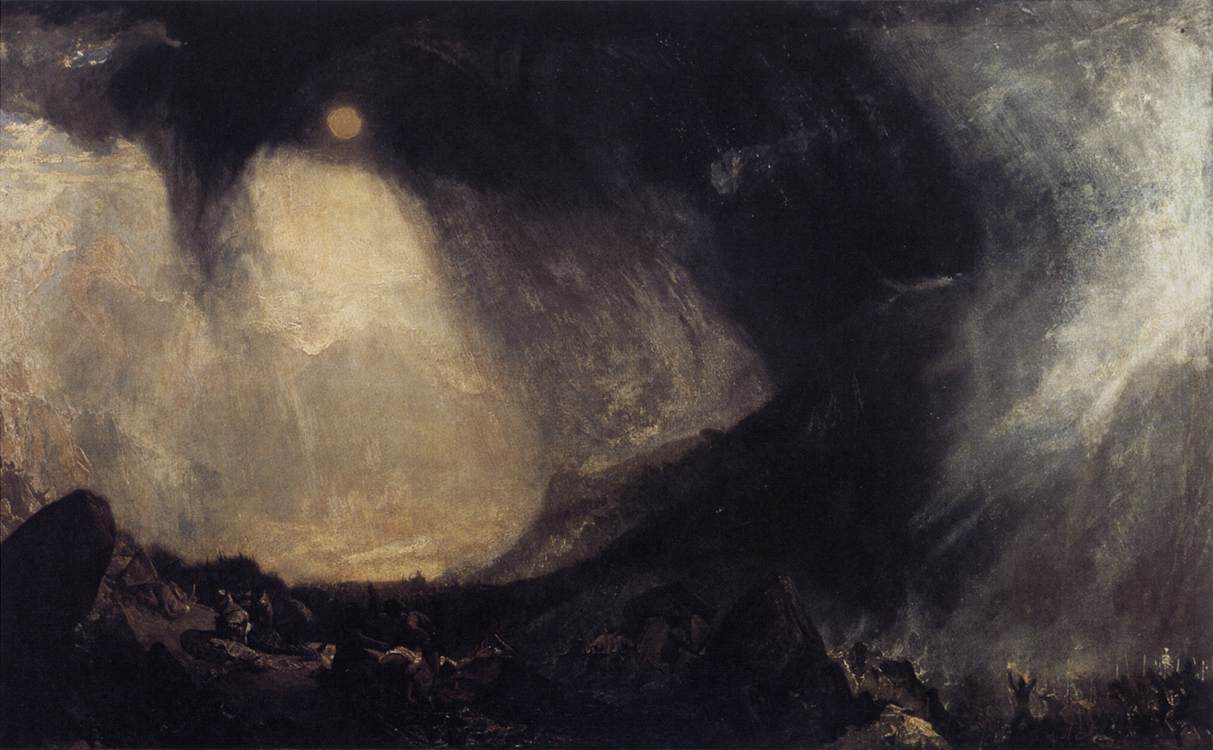
Founded by Phoenician traders, Carthage became the great sea power of the western Mediterranean. In the Second Punic War, Hannibal crossed the Alps and destroyed a Roman army at Cannae (216 BCE). Rome destroyed the city in 146 BCE.

J. M. W. Turner, Snow Storm: Hannibal and his Army Crossing the Alps, 1812 — public domain

Persia

Achaemenid 550–330 BCE; Sassanian 224–651 CE

Cyrus the Great founded the largest empire the world had yet seen, ruling many peoples through local governors and allowing them their own customs and gods. Alexander ended the Achaemenid dynasty; centuries later the Zoroastrian Sassanians revived Persian power until the Arab conquest.

Athens

478–404 BCE

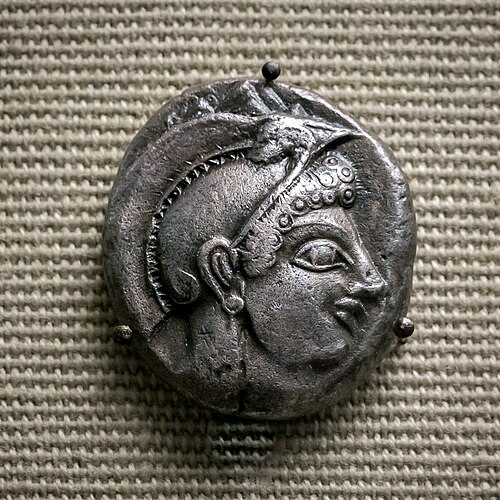
A league of Greek allies against Persia became an Athenian empire, its treasury paying for the Parthenon. Under Pericles, Athens was a democracy at home and a ruthless master abroad. Its defeat by Sparta in 404 BCE left the city where Socrates and Plato went on asking what justice is.

ArchaiOptix, CC BY-SA 4.0

Macedon

359–323 BCE (Philip II and Alexander)

Philip II turned Macedon into the leading power in Greece; his son Alexander, tutored by Aristotle, conquered Persia and reached India in barely a decade. The kingdoms his generals carved from his empire spread Greek culture from Egypt to Afghanistan.

The Alexander Mosaic, Pompeii, c. 100 BCE — public domain

What the philosophers learned

The Mandate of Heaven: Confucius and Mencius

When the Zhou overthrew the Shang, they explained it with a new idea: Heaven grants the right to rule to the virtuous and withdraws it from tyrants. Confucius built a philosophy of government on it, in which a ruler leads by moral example rather than force.

“He who exercises government by means of his virtue may be compared to the north polar star, which keeps its place, and all the stars turn towards it.”Analects 2.1 (tr. James Legge)

Mencius went further. Asked whether killing the last Shang king had been regicide, he answered that a ruler who destroys benevolence and righteousness is no ruler, only “a mere fellow” (Mencius 1B8). Rebellion against a tyrant could be just.

Power without justice: Thucydides

In 416 BCE Athens demanded that the small island of Melos submit. In Thucydides' retelling, the Athenian envoys refuse to discuss justice at all:

“The strong do what they can and the weak suffer what they must.”Thucydides, History of the Peloponnesian War 5.89 (tr. Richard Crawley)

Athens destroyed Melos. A few years later its own empire collapsed. The Melian Dialogue is still read as the founding text of political realism, and as a warning about what empire does to the people who run it.

The cycle of governments: Polybius

The Greek historian Polybius, taken to Rome as a hostage, tried to explain how Rome had conquered the Mediterranean in barely fifty years. Governments, he argued, turn in a cycle: kingship decays into tyranny, aristocracy into oligarchy, democracy into mob rule, and the cycle starts again. Rome's “mixed constitution”, balancing consuls, senate and people, slowed the decay but could not stop it.

Polybius, Histories, Book VI

The circle of kingdoms: Chanakya

“The king who is situated anywhere immediately on the circumference of the conqueror’s territory is termed the enemy.”Chanakya, Arthashastra, Book VI

Chanakya's mandala theory sees states arranged in rings: your neighbour is your natural rival, and your neighbour's neighbour your natural friend. It is one of the earliest systematic theories of international relations, written as advice to the founder of the Maurya empire.

Conquest and remorse: Ashoka

Chandragupta Maurya's grandson Ashoka conquered Kalinga around 261 BCE. In his Rock Edict XIII he records the deaths and deportations of more than a hundred thousand people, and his deep remorse. Afterwards he declared that the only true conquest was conquest by dhamma, righteousness, and had his principles of tolerance and non-violence carved on rocks and pillars across India.

Two cities: Augustine

When the Visigoths sacked Rome in 410 CE, many blamed Christianity for the city's fall. Augustine answered with The City of God (413–426). There are two cities, he wrote: an earthly one built on love of self, and a heavenly one built on love of God. Earthly empires always fall; the mistake is to put ultimate hope in them.

Augustine, The City of God XIV.28

Why dynasties decay: Ibn Khaldun

In 1377 the North African scholar Ibn Khaldun wrote the Muqaddimah, an introduction to history that many call the first work of sociology. Dynasties, he argued, are founded by hardy groups bound by strong solidarity, asabiyya. Success brings cities and luxury, solidarity weakens, and within a few generations the dynasty falls to a new group with the strength it has lost.

Ozymandias

Percy Bysshe Shelley's sonnet of 1818, inspired by a broken statue of Ramesses II, is the shortest lesson on empire ever written. A ruined statue's pedestal still boasts of its maker's greatness:

“‘My name is Ozymandias, King of Kings; Look on my Works, ye Mighty, and despair!’ Nothing beside remains.”Percy Bysshe Shelley, “Ozymandias” (1818)

Further Reading

The Melian Dialogue · Mandate of Heaven · Ibn Khaldun's Muqaddimah · Edicts of Ashoka