Mental health spans hard science, everyday struggle, and practices as old as contemplative tradition itself. Pick a topic to explore what's actually understood.
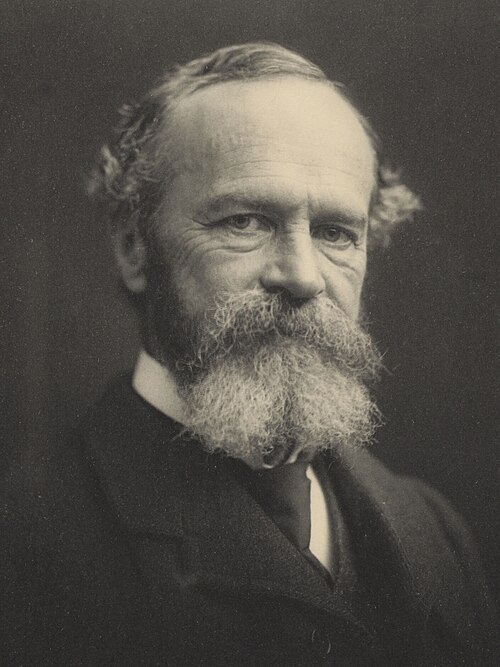
Mental health is often misunderstood as simply the absence of diagnosable illness, but the World Health Organization defines it more fully as a state of well-being in which a person can cope with life's normal stresses, work productively, and contribute to their community — a positive, active state, not just a neutral one. The scientific study of the mind as a subject worthy of its own rigorous inquiry is relatively young; the American philosopher and psychologist William James, whose 1890 textbook "The Principles of Psychology" helped found the discipline in the United States, argued that mental life should be studied through direct, careful observation of consciousness itself, not simply inferred from anatomy.
For most of the 20th century, mental illness carried heavy stigma and was often hidden, institutionalized, or dismissed as a personal failing rather than treated as a health condition. That's shifted substantially in recent decades, with growing recognition that conditions like depression and anxiety are common, treatable, and — much like physical illness — not a matter of willpower or character.
WHO definition: Well-being, coping capacity, and productive contribution — not just absence of illness
Field founded by: William James, "The Principles of Psychology" (1890)
Modern shift: From stigma and concealment toward treatment as routine healthcare
Anxiety and depression are, by a wide margin, the two most common mental health conditions worldwide, together affecting several hundred million people at any given time according to WHO estimates. Anxiety involves persistent, often disproportionate worry or fear that interferes with daily functioning, while depression involves a persistent low mood, loss of interest in previously enjoyable activities, and changes in sleep, appetite, or energy — the two frequently occur together in the same person.
Modern understanding treats both as arising from a genuine mix of biological factors (including brain chemistry and genetics), psychological factors (thought patterns and coping styles), and social or environmental factors (stress, trauma, isolation) — not any single cause. Effective treatment, correspondingly, often combines approaches: therapy, particularly cognitive behavioral therapy, which targets unhelpful thought patterns directly, medication where appropriate, and lifestyle factors like sleep, exercise, and social connection.
Scope: The two most common mental health conditions worldwide
Cause: A combination of biological, psychological, and social factors — not one single cause
Common effective treatment: Cognitive behavioral therapy, often combined with other approaches

Modern clinical mindfulness — now a mainstream, evidence-supported component of treatments like Mindfulness-Based Stress Reduction (MBSR) and Mindfulness-Based Cognitive Therapy (MBCT) — traces directly back to Buddhist meditation practices thousands of years old, particularly Vipassana ("insight") meditation, adapted into secular clinical settings starting in the late 1970s. The core technique — observing thoughts and sensations without judgment or immediate reaction — is, in essence, the same skill Buddhist monks have trained for millennia, repackaged with clinical trial data behind it.
This is one of the clearest places where this site's oldest material and its newest overlap directly: contemplative traditions developed the technique first, and only in the last fifty years has clinical psychology caught up with controlled evidence for what practitioners had long claimed from direct experience — measurable reductions in anxiety, rumination, and stress reactivity.
Clinical form: Mindfulness-Based Stress Reduction (MBSR), developed 1979
Root tradition: Buddhist Vipassana ("insight") meditation
What's new: Controlled clinical evidence for an ancient practice

Psychological resilience — the capacity to adapt well and recover functioning after adversity, trauma, or significant stress — isn't a fixed personality trait some people simply have and others lack. Longitudinal research consistently shows it's built through a combination of factors that can be actively strengthened: strong social connections, a sense of purpose or meaning, practiced coping skills, and — critically — a willingness to ask for support rather than facing hardship alone.
That last point runs against a common but mistaken instinct: that resilience means enduring difficulty silently and unaided. Research on help-seeking behavior consistently finds the opposite — people who reach out for support, whether from friends, family, or professional care, tend to recover from adversity faster and more completely than those who try to manage entirely alone.
Not a fixed trait: Resilience is built, not simply possessed
Key ingredients: Social connection, sense of purpose, practiced coping skills
Counterintuitive finding: Asking for help speeds recovery more than facing hardship alone
Every tradition explored elsewhere on this site treats the inner life as something to be trained, not left to chance — the Stoics practiced it, the Buddhists practiced it, the mystics practiced it. Modern mental health science, at its best, is the same discipline pursued with clinical trials instead of only lived testimony.
Mental health on Wikipedia · WHO: Mental health fact sheet · Tele-MANAS: free 24/7 helpline (India, 14416)