Every one of these people made a discovery that textbooks now take for granted. Almost none of them got the recognition, funding, or credit that discovery deserved in their own lifetime — often because of their gender, background, or where they came from. Pick a name to find out what they actually did.
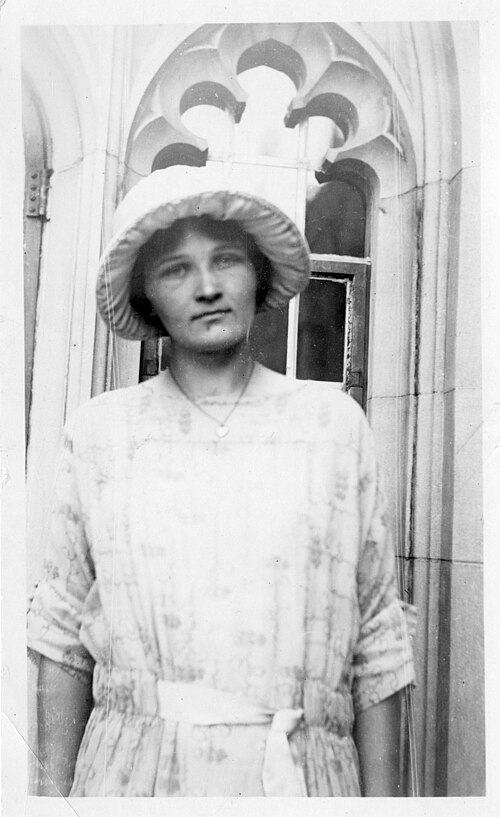
In her 1925 PhD thesis at Harvard, the British-born astronomer Cecilia Payne-Gaposchkin showed that stars are made overwhelmingly of hydrogen and helium — overturning the prevailing assumption that stars shared roughly Earth's composition. It's now considered one of the most important PhD theses in the history of astronomy.
Her thesis advisor, the eminent astronomer Henry Norris Russell, told her the result must be wrong and persuaded her to describe it as merely "spurious" in her own paper. Four years later, Russell reached the same conclusion using different data and published it himself — and for decades, textbooks credited the discovery primarily to him. Payne-Gaposchkin went on to become the first woman to chair a department at Harvard, but recognition for her original breakthrough came only much later in her life.
Field: Astrophysics
Breakthrough: Proved stars are made mostly of hydrogen and helium (1925)
Overlooked because: Pressured to downplay her own conclusion; a male colleague received more credit for confirming it years later
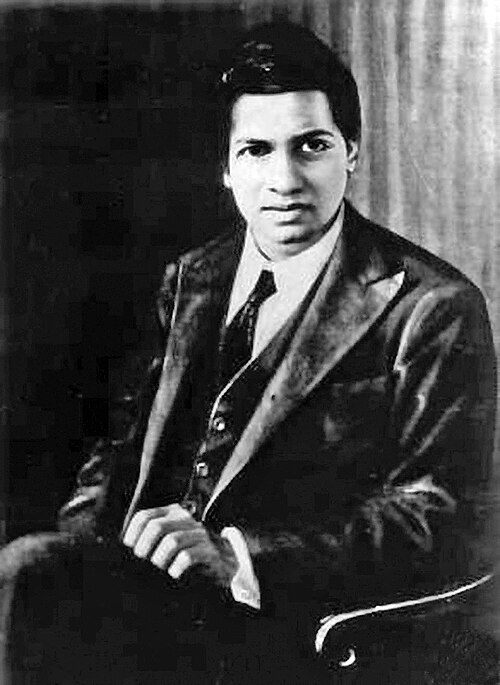
Almost entirely self-taught, with no formal training beyond high school, Srinivasa Ramanujan worked in isolation in Kumbakonam, India, filling notebooks with original results in number theory and infinite series that he had no way of knowing were unknown to the rest of mathematics. In 1913, he mailed a letter full of unproven theorems to the Cambridge mathematician G.H. Hardy, who recognized their brilliance immediately and brought him to England.
Over the following years, Ramanujan produced thousands of original results, many so far ahead of their time that mathematicians didn't have the tools to prove some of them correct until decades after his death. He died at just 32, likely of a chronic illness worsened by the English climate and years of malnutrition — leaving notebooks that mathematicians are, remarkably, still mining for new insights today.
Field: Number theory & mathematical analysis
Breakthrough: Thousands of original results, many proven correct only decades after his death
Notable: Almost entirely self-taught, working in isolation before Hardy discovered him
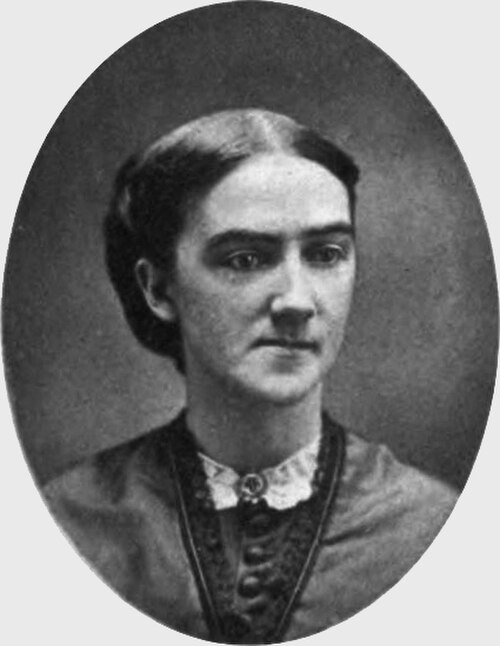
In 1870, Ellen Swallow Richards became the first woman admitted to MIT and the first woman in the United States to earn a degree in science. As a pioneering environmental and sanitary chemist, she led the first large-scale water-quality survey ever conducted in the U.S., testing thousands of samples across Massachusetts between 1887 and 1890 — work that directly led to the country's first state water-quality standards.
Despite completing doctoral-level work, MIT never granted her the PhD she'd earned; some accounts suggest the institution didn't want to be embarrassed by awarding a woman a doctorate before a man had received one in the same program. She spent years teaching as an unpaid or underpaid instructor, all while founding what would become the field of home economics and helping establish ecology as a formal U.S. science.
Field: Environmental & sanitary chemistry
Breakthrough: First large-scale U.S. water-quality survey, leading to the nation's first state water standards
Overlooked because: MIT withheld a doctorate she had earned; worked for years as an unpaid instructor
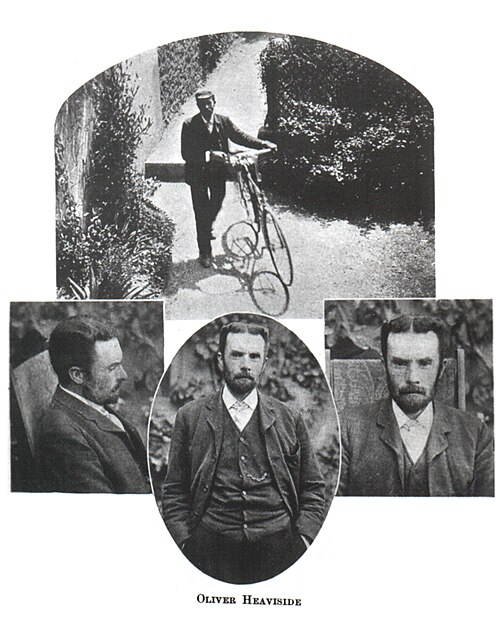
Partially deaf from childhood illness and almost entirely self-taught, Oliver Heaviside left school at 16 and never held a university post. Working largely alone, he took James Clerk Maxwell's original twenty equations describing electromagnetism and reformulated them into the compact four vector-calculus equations still taught today simply as "Maxwell's Equations" — along with inventing much of the vector calculus notation used to write them.
He also predicted the existence of an electrically charged layer high in the atmosphere that reflects radio waves back to Earth, later confirmed and named the Heaviside layer. Prickly, reclusive, and frequently at odds with the scientific establishment of his day, he spent his final years in poverty and self-imposed isolation, his foundational contributions to electrical engineering only fully appreciated after his death.
Field: Mathematical physics & electrical engineering
Breakthrough: Reformulated Maxwell's equations into their modern four-equation form
Overlooked because: A self-taught outsider, reclusive and often at odds with the academic establishment
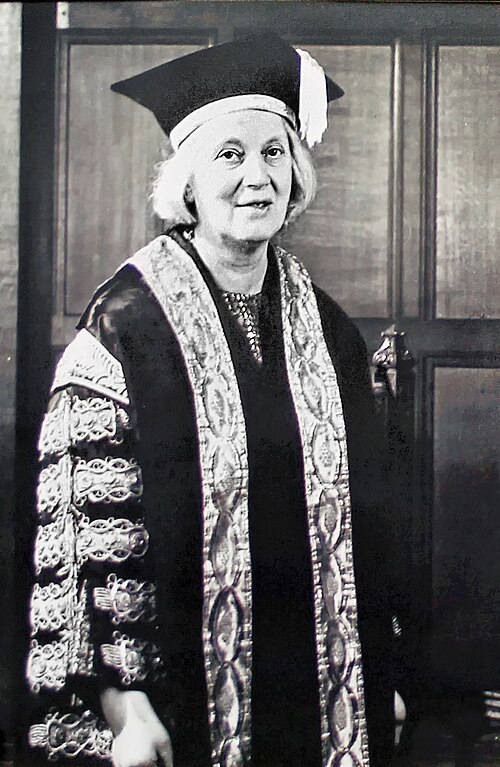
British chemist Dorothy Hodgkin pushed X-ray crystallography — a technique for working out a molecule's 3D structure from how it scatters X-rays — further than anyone before her, determining the structures of cholesterol in 1937, penicillin in 1945, and vitamin B12 in 1954. She spent 35 years painstakingly working toward the structure of insulin, finally solving it in 1969.
In 1964, she won the Nobel Prize in Chemistry — to this day, still the only British woman ever to win a Nobel Prize in a scientific field. Even so, contemporary British press coverage of her win notably fixated on her domestic life and appearance rather than the science; one newspaper headline is widely remembered as having described her as an "Oxford housewife" who'd won the Nobel Prize.
Field: X-ray crystallography, chemistry
Breakthrough: Determined the molecular structures of penicillin, vitamin B12, and insulin
Recognition: 1964 Nobel Prize in Chemistry — still the only British woman to win a science Nobel
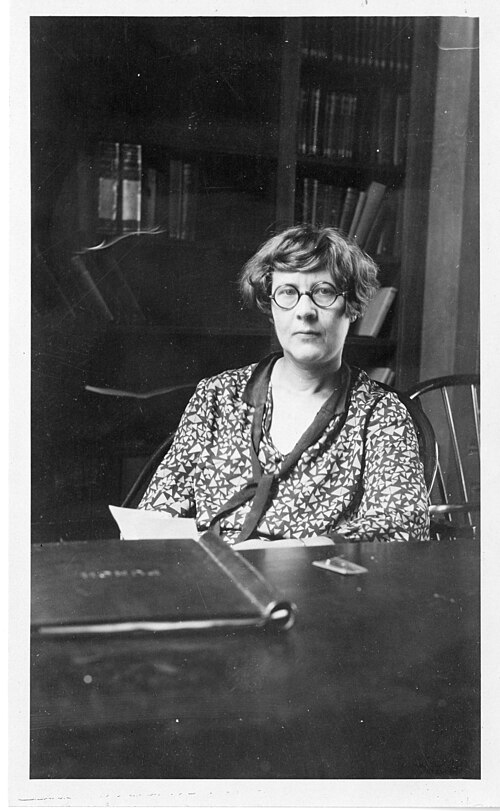
American physiologist Matilda Moldenhauer Brooks discovered that the common dye methylene blue could act as a life-saving antidote to cyanide and carbon monoxide poisoning, by helping cells continue using oxygen even when the body's normal respiratory enzymes were blocked. Her treatment became a standard emergency-medicine intervention used for decades to save poisoning victims.
Much of her research was conducted alongside her husband, physiologist Sumner Cushing Brooks, and like many women scientists of her generation, she often worked in research positions well below the prestige her findings warranted, with her name receiving far less public recognition than the treatment she pioneered.
Field: Physiology & toxicology
Breakthrough: Discovered methylene blue as an antidote to cyanide and carbon monoxide poisoning
Impact: Her treatment became a standard emergency-medicine intervention for decades
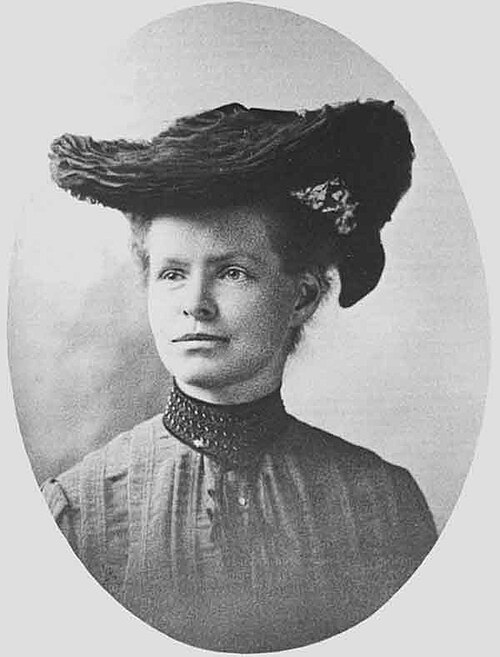
Working largely independently in 1905, American geneticist Nettie Stevens discovered that biological sex is determined by a specific pair of chromosomes — what we now call X and Y — overturning long-held assumptions that sex was shaped by environmental conditions or the mother alone. It was a foundational discovery in modern genetics.
The more senior, already well-established biologist Edmund Beecher Wilson published very similar findings around the same time, and for decades, textbooks credited the discovery primarily to him, even though Stevens's independent work is now regarded by many historians of science as the more conclusive of the two. She died of breast cancer at just 50, only a few years after her discovery, before receiving the recognition it deserved.
Field: Genetics & cytology
Breakthrough: Discovered that chromosomes (XX/XY) determine biological sex
Overlooked because: A more senior male contemporary's similar work overshadowed hers in textbooks for decades
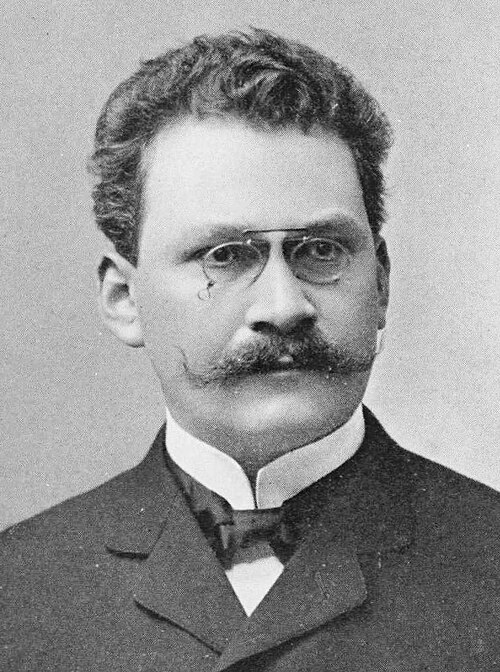
German mathematician Hermann Minkowski once taught a young Einstein at ETH Zurich, and reportedly considered him something of a "lazy dog" as a student. Years later, in 1907–08, Minkowski took Einstein's 1905 special theory of relativity and reformulated it as a single, unified four-dimensional geometry of space and time — the concept now known as spacetime.
Einstein was initially skeptical of what seemed like an overly abstract mathematical repackaging of his physics, before coming to recognize that Minkowski's geometric framework was exactly the tool he needed to build his later, far more ambitious general theory of relativity. Minkowski died suddenly of a ruptured appendix in 1909, at just 44, before seeing how central his reformulation would become to twentieth-century physics.
Field: Mathematics & mathematical physics
Breakthrough: Reformulated special relativity as four-dimensional "spacetime" geometry
Legacy: The essential mathematical foundation later used to build general relativity
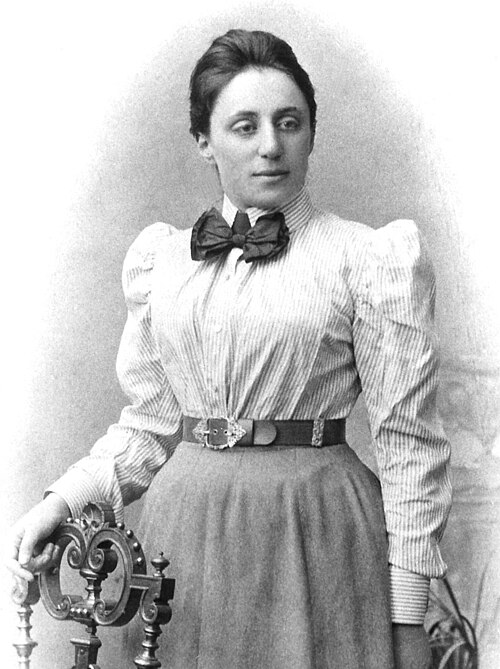
German mathematician Emmy Noether made foundational contributions to abstract algebra, but she's arguably best known for Noether's theorem (1918), which proved that every symmetry in the laws of physics corresponds to a conservation law — for instance, that the universe's symmetry in time is precisely why energy is conserved. Einstein himself called it essential to understanding modern physics.
For years, Göttingen University barred her from holding a paid faculty position purely because she was a woman; she lectured unofficially under a male colleague's name before finally receiving a junior paid position. In 1933, facing persecution as both a woman and a Jew under the Nazi regime, she fled Germany for the United States, where she died just two years later at 53 — before the full extent of her influence on both mathematics and physics was widely recognized.
Field: Abstract algebra & mathematical physics
Breakthrough: Noether's theorem — linking every physical symmetry to a conservation law
Overlooked because: Barred from a paid professorship for years solely because of her gender
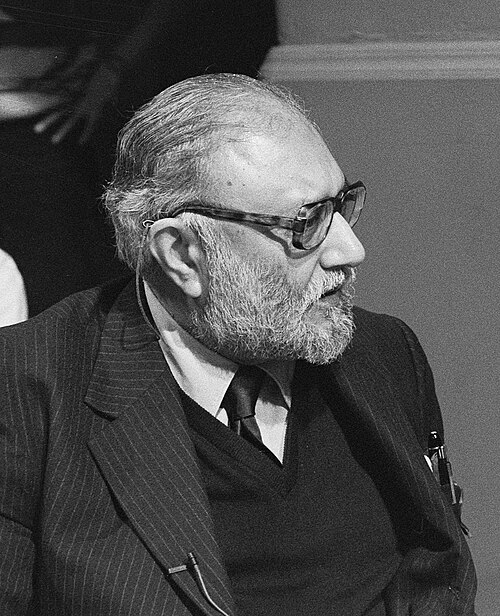
Pakistani theoretical physicist Abdus Salam shared the 1979 Nobel Prize in Physics for developing electroweak theory, which unified two of nature's fundamental forces — electromagnetism and the weak nuclear force — into a single framework. He remains the first, and to date only, Pakistani and the first Muslim to win a Nobel Prize in the sciences. He went on to found the International Centre for Theoretical Physics in Trieste specifically to give scientists from developing countries access to world-class research facilities they'd otherwise never reach.
Despite this, Salam faced severe persecution at home for belonging to the Ahmadiyya Muslim community, which Pakistan's government declared legally non-Muslim in 1974. Even after his death, the word "Muslim" was reportedly erased from the phrase "First Muslim Nobel Laureate" originally inscribed on his gravestone, by local authorities enforcing that same law.
Field: Theoretical physics
Breakthrough: Co-developed electroweak unification theory (1979 Nobel Prize)
Overlooked because: Faced religious persecution in his home country despite being its only science Nobel laureate
None of these ten discoveries were minor. Stars are made of hydrogen because Payne-Gaposchkin proved it; every electrical engineer still uses Heaviside's equations; every physicist still leans on Noether's theorem. What connects these ten isn't the size of their contribution — it's how much harder each of them had to work just to be believed, funded, or remembered for it. Knowing their names is part of getting the history right.
Cecilia Payne-Gaposchkin on Wikipedia · Srinivasa Ramanujan on Wikipedia · The Matilda effect on Wikipedia