Sun Tzu (also rendered Sunzi, meaning roughly "Master Sun") is traditionally identified as a military general and strategist active during China's Spring and Autumn period, conventionally dated to around 544–496 BCE, serving the state of Wu. Much like Homer in the Western tradition, the historical details of his life are genuinely uncertain: the earliest surviving biographical account comes from the historian Sima Qian, writing centuries later, and modern scholars debate whether the text attributed to him was written by a single general, compiled and expanded by later military strategists (possibly including a descendant, Sun Bin), or assembled gradually over generations of Warring States-era warfare. What is not in doubt is the enormous and lasting influence of the text that bears his name.
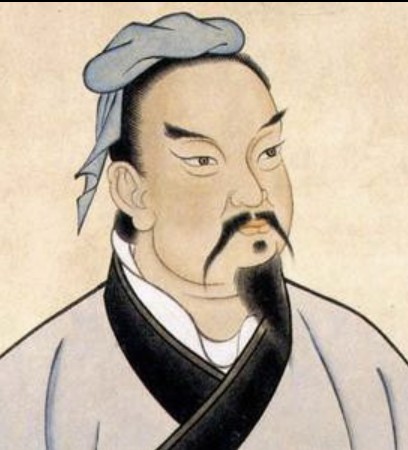 A later, imagined portrait — no likeness of Sun Tzu survives
The Art of War (Sunzi Bingfa) is a compact treatise of thirteen chapters covering subjects from calculating strategic advantage and deception to terrain, spies, and the psychology of command. Unlike many Western military texts focused on tactics and force, its central preoccupation is economy and avoidance: the highest form of victory, it argues, is winning without ever having to fight — through superior positioning, intelligence, timing, and the deliberate unsettling of an opponent's plans before battle is ever joined. Deception, patience, adaptability to terrain and circumstance, and a clear-eyed assessment of one's own strengths and weaknesses recur as constant themes throughout the text.
Key Concepts: winning without fighting, deception, terrain and timing, knowing oneself and one's opponent, adaptability
Related Topics: Chinese military philosophy, the Warring States period, strategic theory
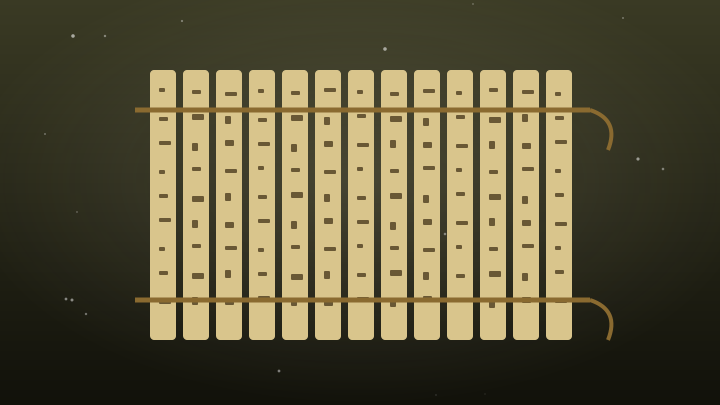 Illustration: early copies of The Art of War were written on bound bamboo slips, like the Han-dynasty set found at Yinqueshan in 1972 (marks here are decorative)
Long before its modern global fame, The Art of War was studied throughout East Asian military and political history, influencing centuries of Chinese, Japanese, and Korean strategic thought. In the 20th century, its ideas were explicitly cited by Mao Zedong in developing guerrilla warfare tactics during the Chinese Civil War. Since the mid-20th century, the text has undergone a remarkable second life far outside its original military context, becoming a staple reference in business strategy, competitive sports coaching, negotiation theory, and popular self-help writing — often stripped of its original historical setting and read instead as a general handbook for competitive thinking under uncertainty.
The Art of War is among the oldest military treatises still actively read and studied today, translated into dozens of languages and taught at military academies worldwide, including the United States Military Academy at West Point. Whether Sun Tzu was a single historical general, a composite figure, or a name attached to a text refined by many hands, the work attributed to him remains one of the most concentrated and widely applied statements on strategy, discipline, and the psychology of conflict ever written — a text still being actively reinterpreted, more than two thousand years after it was first compiled.
Explore more about Sun Tzu on Wikipedia.