From the fight for the eight-hour day to Aristotle's case for leisure, the balance between work and life has always been contested, not natural. Pick a topic to explore.
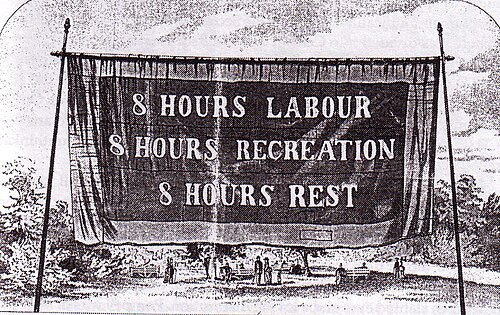
Before industrialization, work hours were largely set by daylight and season, especially in agriculture. Factory work changed that entirely: 14–16 hour days, six or seven days a week, including for young children, were common in early 19th-century industrial Britain and the United States. The "eight-hour day" movement — organizing around the slogan "eight hours for work, eight hours for rest, eight hours for what we will" — began pushing back as early as the 1810s, with strikes and banners like this 1856 one among its landmark early rallying points.
In the US, the 40-hour, five-day week wasn't legally standardized until the Fair Labor Standards Act of 1938, following decades of labor organizing, and Henry Ford's earlier, voluntary adoption of a five-day week at his factories in 1926 (partly to boost worker productivity and consumer spending, not purely out of generosity). The eight-hour day, treated as an unquestioned default today, is a comparatively recent and hard-won standard, not a natural given.
Pre-industrial norm: Hours set by daylight and season, not a fixed clock
Early organizing slogan: "Eight hours for work, eight hours for rest, eight hours for what we will"
US legal standard: The 40-hour week wasn't federal law until 1938
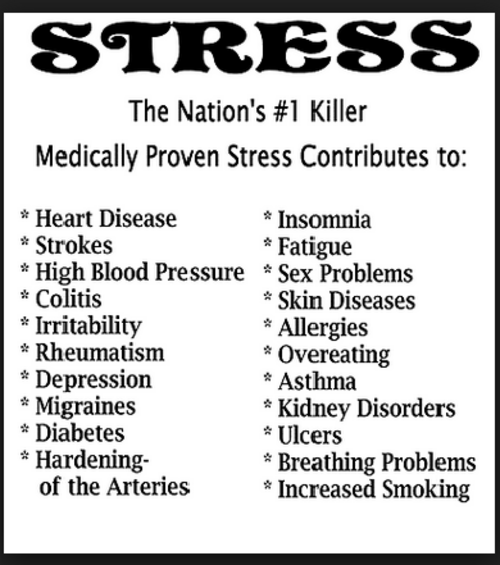
The World Health Organization formally recognized "burnout" in 2019 as an occupational phenomenon, not a medical condition, resulting specifically from chronic workplace stress that hasn't been successfully managed, characterized by three core features: feelings of energy depletion or exhaustion, increased mental distance from or cynicism about one's job, and reduced professional effectiveness.
Research consistently identifies burnout as arising less from workload alone than from a mismatch between a person and their job across several dimensions: unsustainable workload, lack of control over how work gets done, insufficient reward or recognition, breakdown of community and support, perceived unfairness, and conflict between personal values and job demands. This reframes burnout as substantially a structural and organizational problem, not simply a personal failure of stress management — a shift with real implications for how workplaces are expected to respond to it.
Recognized by WHO: 2019, as an occupational phenomenon
Three core features: Exhaustion, cynicism/detachment, reduced effectiveness
Root cause: Usually a mismatch between the person and the job, not just workload

Remote and hybrid work, already growing gradually beforehand, expanded enormously and rapidly during the COVID-19 pandemic, and much of that shift has persisted since, particularly in knowledge-based industries — reshaping assumptions about where work has to physically happen that had gone largely unquestioned for over a century of office-centered work culture.
A parallel experiment has tested compressing the work itself: large-scale four-day workweek trials, including a widely cited 2022 UK pilot involving thousands of employees across dozens of companies, found that most participating organizations maintained or even improved productivity and revenue with a 20% reduction in working hours, alongside substantial employee-reported improvements in stress, burnout, and work-life balance. Most participating companies chose to continue the policy after the trial ended.
Major shift: Remote/hybrid work expanded dramatically during the COVID-19 pandemic
Notable trial: 2022 UK four-day workweek pilot, dozens of companies
Result: Most maintained productivity with 20% fewer hours worked
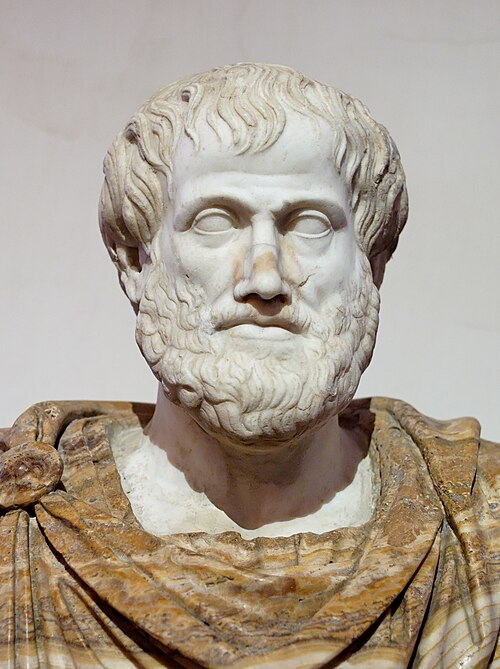
Aristotle argued, in the Nicomachean Ethics and Politics, that leisure (scholē) was not idleness or mere recovery from work, but the true end toward which work itself should point — the space in which a person could pursue philosophy, friendship, and civic life, the activities Aristotle considered most fully human. In his view, we work in order to have leisure, not the reverse, a framing that inverts how many modern cultures implicitly treat the relationship between the two.
That inversion is worth sitting with: contemporary work culture, particularly in always-connected digital workplaces, often treats leisure as a residual category, whatever time is left over once work demands are satisfied, rather than as something with its own independent value worth actively protecting. The oldest philosophical traditions on this site, from Stoic discipline to Buddhist non-attachment, generally agree on at least this much: an unexamined relationship with work is as worth questioning as any other unexamined part of a life.
Key source: Aristotle's Nicomachean Ethics and Politics
Core claim: We work in order to have leisure, not the reverse
Modern tension: Leisure is often treated as leftover time, not a protected value
The question of how much of a life should belong to work was never settled by the eight-hour day — it just moved. Every generation renegotiates the line for itself, and the philosophers on this site, Aristotle included, would likely say that's exactly as it should be: examined, not assumed.
Work–life balance on Wikipedia · WHO: Burnout as an occupational phenomenon · Bertrand Russell, In Praise of Idleness